


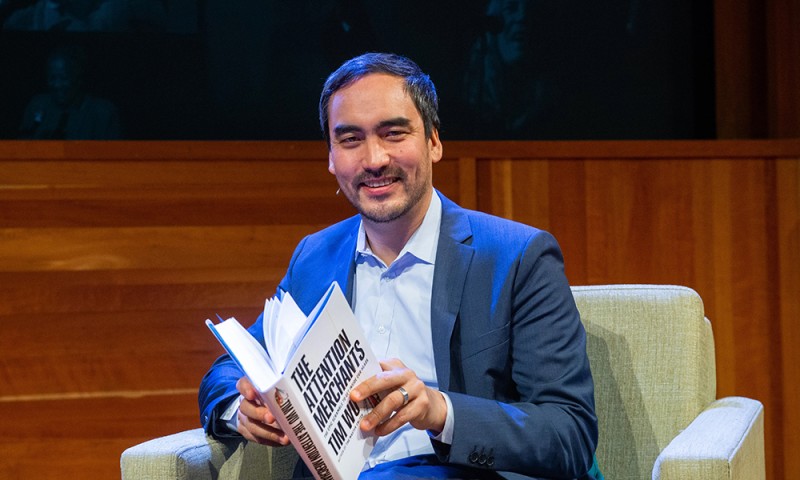
曾在拜登政府任职、颇具影响力的哥伦比亚法学院(Columbia Law School)教授吴修铭(Tim Wu)携其新观点回归:现代美国资本主义已退化成一个以积累市场权力和“榨取”为特征的系统,在全国范围内催生出一种深刻的“经济怨恨”情绪。
在其新书《榨取时代》发行之际接受《财富》杂志采访时,吴修铭将当前的政治动荡与一种普遍感受——“我们的体系不公平”——联系起来。他认为,这种无处不在的愤怒源于个人感觉“被权力压倒,而非在竞争中落败”,这比在公平竞争中失败所产生的怨恨要强烈得多。
吴修铭将核心问题界定为企业目标的转变:从致力于打造“人们因其优质而想购买的好产品”,转向寻求“掌控他人并尽可能从其身上榨取价值”的模式。吴修铭承认,他的观点与老友科利·多克托罗(Cory Doctorow)近期的著述有许多相似之处;尽管多克托罗的论点主要围绕科技领域,但他承认两人的思想内核高度一致。“我认为这某种程度上是一个全经济范围的问题。一切都在悄然恶化。就是那种你喜欢的东西正变得越来越糟的怪异感觉。”
吴修铭将此归咎于“纪律缺失”。他表示,在当今这个榨取时代,太多公司放任自流。他说,强大的竞争对手、法律执行和公司员工都能施加纪律约束感,“但在目前这么多市场中,这些力量都不够强大……纪律缺失让公司得以降低产品和服务质量而不受惩罚。”从更广的视角看,这种趋势挑战了美国进步的基本理念,尤其是在本应作为“发明行业”不断推动改进的科技行业。
“我所理解的美国是一个事物理应变得更好的地方,”吴修铭说。他认为,生活在一个许多事物反而在变糟的时代,“动摇了美国理念的核心,也动摇了科技行业的进步理念”——但他确实看到了一个看似不太可能的解决方案。
作为一名体育迷,吴修铭说,有一个市场结构提供了清晰的范例,它拥有纪律,事物事实上并未变糟,价值未被榨取。它是一个人们因其优质而想购买的好产品:美国国家橄榄球联盟(NFL)。他说,NFL通过薪资帽、选秀和赛程调整等机制实现“积极的再平衡”,阐明了公平规则的重要性。
NFL如何能为经济提供解方
尽管NFL仍然具有竞争性和精英性,但它确保即使是最差的球队也“有机会得到一位伟大的四分卫”并重新获得竞争力,就像堪萨斯城酋长队(Kansas City Chiefs)凭借其招牌球员帕特里克·马霍姆斯(Patrick Mahomes)和特拉维斯·凯尔斯(Travis Kelce)取得历史性成功那样。吴修铭认为,像堪萨斯城这样的小市场球队经常主导像纽约这样的大市场球队,在“纯粹的经济游戏”中是难以想象的。相比之下,吴修铭指出美国职业棒球大联盟(MLB)一直“被失控的支出所扭曲”。这导致了资源“荒谬”的错配,小球队因资源短缺而举步维艰,而非实力不济。(大市场球队洛杉矶道奇队(Los Angeles Dodgers)拥有棒球史上最高的薪资总额,刚刚庆祝了其连续第二次世界大赛冠军。)
NFL的成功为美国经济应如何运作提供了一个范例。“我不是社会主义者,”吴修铭告诉《财富》杂志。“从某种意义上说,我在这里试图不是要摧毁资本主义,而是要让它回归其应有的样子。”在他的新书中,吴修铭用听起来类似于2025年占据新闻头条的K型经济(指富人愈富、穷人愈穷的经济形态)的语言来描述“榨取者”和“被榨取者”。“我认为两者紧密相关,”吴修铭说,并补充说他并非有意在书中直接将其联系起来。
“我认为我们已经朝着一种经济模式发展,其商业模式的焦点是积累市场权力然后进行榨取,根据定义,几乎依据基本的微观经济学,这将导致大量财富(向上)再分配。”吴修铭补充说,他认为许多曾经支撑中产阶级甚至中上阶层生活方式的行业“正被压制,而少数几个回报超高的行业受到青睐”,包括集中的中间商、金融业的某些部分以及科技平台。
他辩称,如果美国人如此喜爱每周日在电视上观看NFL,为什么不将联盟的相同原则应用到我们构建社会的方式上呢?毕竟,吴修铭指出,他过去在一些事情上的判断是正确的,对社会有益。
网络中立性与注意力
这位被《纽约时报》描述为“拜登反垄断政策架构师”的哥伦比亚大学(Columbia University)杰出教授,其贡献不止一个,而是好几个重大理念。其一是“网络中立性”,这是吴修铭20多年前提出的概念,即互联网服务提供商必须对其传输的内容持中立态度。这是一场明确的胜利,因为相关法律仍然有效。另一个是关于“注意力经济”的论文和著作(《注意力商人》),大约10年前由吴修铭发布,他敲响了警钟,指出在互联网时代注意力如何变成商品并日益被剥削。
吴修铭表示他想保持谦逊,但真诚地相信自己十年前对注意力经济的看法是正确的。“也许这有点显而易见,”他说,但人类注意力资源正变得越来越稀缺和宝贵,而且“公司在以极低价格从我们身上收割这种资源方面非常老练。”
作为父母(他的孩子分别是9岁和12岁),吴修铭说他注意到“人们对孩子使用注意力经济产品敏感得多”,并且相信已经出现了一场夺回注意力的反向运动。他指出,大型语言模型正以非常类似的方式流行起来,而且目前上面没有广告,所以“问题并没有消失,我们也没法远离手机。我只是觉得现在人们认识得更清楚了。”
与政治共舞及“啤酒大战”
在与《财富》杂志的对话中,吴修铭回顾了他在拜登白宫工作的时光,称那是“一次重要而伟大的经历”,但他希望他们能在儿童隐私问题上做得更多,因为他相信99%的美国人会支持该领域的立法。然而,当他在白宫工作时,“任何事、任何议题都不可能进行投票”。他说国会“不想让事情进入投票程序”,并将许多僵局归因于“大型科技公司对政治的影响力已经变得非常强大”这一事实。
当被问及是否有兴趣再次在政府工作,或许与他的老朋友莉娜·可汗(Lina Khan)一起在佐赫兰·马姆达尼(Zohran Mamdani)的纽约市长任期内工作时,吴修铭只说他“非常支持新市长”。他说他可能会以某种方式再次参与政治,但这些日子“更注重家庭模式”。吴修铭的公共服务历史可能长得令人惊讶,他曾在联邦贸易委员会(Federal Trade Commission)从事反垄断执法工作,并在奥巴马政府时期为国家经济委员会(National Economic Council)制定竞争政策。2014年,吴修铭是纽约州副州长的民主党初选候选人,在那里他第一次见到了可汗。
吴修铭最近确实卷入了一些左翼内部的经济争论,他在关于降低纽约市体育场热狗和啤酒价格的辩论中站在了可汗一边。“啤酒大战”在推特上爆发,吴修铭和可汗站在支持降价的一边,而马特·伊格莱西亚斯(Matt Yglesias)和杰森·福尔曼(Jason Furman)则持更中间派的立场,主张让自由市场设定价格。吴修铭说这是一场“奇怪的战斗”,并表示左翼内部在经济问题上似乎存在一种他并不完全理解的紧张关系,并补充说他过去曾与福尔曼富有成效地合作过。总的来说,他说他认为“我们的政治非常愤怒,部分原因是经济怨恨……它以奇怪的方式表达出来,并走向各个方向。”将此与他的新书联系起来,他认为总的来说,“我们让事情有点过火了”,并且我们“有点失去了作为美国方式的广泛财富积累传统”。
当被问及纽约商界对马姆达尼和“民主社会主义”一词的哗然时,吴修铭说这已经有点成为一个“总括性”术语,因为“一个真正的社会主义者认为所有生产资料都应归国家所有”,而马姆达尼的民主社会主义者并不完全主张这一点。他说,也许左翼的一些人希望更直接地拥有公共事物,但这更多是那种相同的“我们走得太远了”的感觉的混合体。吴修铭补充说,他个人感觉与路易斯·布兰代斯(Louis Brandeis)最有共鸣,布兰代斯是进步主义运动(Progressive Movement)中的一位司法人物,对发展现代反垄断法和“隐私权”概念很有影响。
“如果你想谈论美国正漂向更像共产主义的东西,那更多是在特朗普政府中看到的这种真实的、非常积极的国家干预的理念”,例如,收购了英特尔(Intel)等美国主要公司的股份。“那实际上更像社会主义”,以及你在“指令性经济”中看到的东西,吴修铭说。他将其比作斯大林主义或墨索里尼统治下的法西斯主义,“我意识到这两者都不是最讨人喜欢的标签。”当然,这也类似于中国的共产主义,吴修铭说。
吴修铭说他希望这种情况不会发生。美国可能走向一种商业模式是榨取——试图找到凌驾于他人之上的权力并尽可能吸干——的道路,也可能走向另一条更好的道路。“我认为我们可以做得更好。坦率地说,我非常相信商业的力量。我认为我们需要回归‘种瓜得瓜,种豆得豆'这样的理念,即你的投资会让你有所收获。”(*)
译者:中慧言-王芳
曾在拜登政府任职、颇具影响力的哥伦比亚法学院(Columbia Law School)教授吴修铭(Tim Wu)携其新观点回归:现代美国资本主义已退化成一个以积累市场权力和“榨取”为特征的系统,在全国范围内催生出一种深刻的“经济怨恨”情绪。
在其新书《榨取时代》发行之际接受《财富》杂志采访时,吴修铭将当前的政治动荡与一种普遍感受——“我们的体系不公平”——联系起来。他认为,这种无处不在的愤怒源于个人感觉“被权力压倒,而非在竞争中落败”,这比在公平竞争中失败所产生的怨恨要强烈得多。
吴修铭将核心问题界定为企业目标的转变:从致力于打造“人们因其优质而想购买的好产品”,转向寻求“掌控他人并尽可能从其身上榨取价值”的模式。吴修铭承认,他的观点与老友科利·多克托罗(Cory Doctorow)近期的著述有许多相似之处;尽管多克托罗的论点主要围绕科技领域,但他承认两人的思想内核高度一致。“我认为这某种程度上是一个全经济范围的问题。一切都在悄然恶化。就是那种你喜欢的东西正变得越来越糟的怪异感觉。”
吴修铭将此归咎于“纪律缺失”。他表示,在当今这个榨取时代,太多公司放任自流。他说,强大的竞争对手、法律执行和公司员工都能施加纪律约束感,“但在目前这么多市场中,这些力量都不够强大……纪律缺失让公司得以降低产品和服务质量而不受惩罚。”从更广的视角看,这种趋势挑战了美国进步的基本理念,尤其是在本应作为“发明行业”不断推动改进的科技行业。
“我所理解的美国是一个事物理应变得更好的地方,”吴修铭说。他认为,生活在一个许多事物反而在变糟的时代,“动摇了美国理念的核心,也动摇了科技行业的进步理念”——但他确实看到了一个看似不太可能的解决方案。
作为一名体育迷,吴修铭说,有一个市场结构提供了清晰的范例,它拥有纪律,事物事实上并未变糟,价值未被榨取。它是一个人们因其优质而想购买的好产品:美国国家橄榄球联盟(NFL)。他说,NFL通过薪资帽、选秀和赛程调整等机制实现“积极的再平衡”,阐明了公平规则的重要性。
NFL如何能为经济提供解方
尽管NFL仍然具有竞争性和精英性,但它确保即使是最差的球队也“有机会得到一位伟大的四分卫”并重新获得竞争力,就像堪萨斯城酋长队(Kansas City Chiefs)凭借其招牌球员帕特里克·马霍姆斯(Patrick Mahomes)和特拉维斯·凯尔斯(Travis Kelce)取得历史性成功那样。吴修铭认为,像堪萨斯城这样的小市场球队经常主导像纽约这样的大市场球队,在“纯粹的经济游戏”中是难以想象的。相比之下,吴修铭指出美国职业棒球大联盟(MLB)一直“被失控的支出所扭曲”。这导致了资源“荒谬”的错配,小球队因资源短缺而举步维艰,而非实力不济。(大市场球队洛杉矶道奇队(Los Angeles Dodgers)拥有棒球史上最高的薪资总额,刚刚庆祝了其连续第二次世界大赛冠军。)
NFL的成功为美国经济应如何运作提供了一个范例。“我不是社会主义者,”吴修铭告诉《财富》杂志。“从某种意义上说,我在这里试图不是要摧毁资本主义,而是要让它回归其应有的样子。”在他的新书中,吴修铭用听起来类似于2025年占据新闻头条的K型经济(指富人愈富、穷人愈穷的经济形态)的语言来描述“榨取者”和“被榨取者”。“我认为两者紧密相关,”吴修铭说,并补充说他并非有意在书中直接将其联系起来。
“我认为我们已经朝着一种经济模式发展,其商业模式的焦点是积累市场权力然后进行榨取,根据定义,几乎依据基本的微观经济学,这将导致大量财富(向上)再分配。”吴修铭补充说,他认为许多曾经支撑中产阶级甚至中上阶层生活方式的行业“正被压制,而少数几个回报超高的行业受到青睐”,包括集中的中间商、金融业的某些部分以及科技平台。
他辩称,如果美国人如此喜爱每周日在电视上观看NFL,为什么不将联盟的相同原则应用到我们构建社会的方式上呢?毕竟,吴修铭指出,他过去在一些事情上的判断是正确的,对社会有益。
网络中立性与注意力
这位被《纽约时报》描述为“拜登反垄断政策架构师”的哥伦比亚大学(Columbia University)杰出教授,其贡献不止一个,而是好几个重大理念。其一是“网络中立性”,这是吴修铭20多年前提出的概念,即互联网服务提供商必须对其传输的内容持中立态度。这是一场明确的胜利,因为相关法律仍然有效。另一个是关于“注意力经济”的论文和著作(《注意力商人》),大约10年前由吴修铭发布,他敲响了警钟,指出在互联网时代注意力如何变成商品并日益被剥削。
吴修铭表示他想保持谦逊,但真诚地相信自己十年前对注意力经济的看法是正确的。“也许这有点显而易见,”他说,但人类注意力资源正变得越来越稀缺和宝贵,而且“公司在以极低价格从我们身上收割这种资源方面非常老练。”
作为父母(他的孩子分别是9岁和12岁),吴修铭说他注意到“人们对孩子使用注意力经济产品敏感得多”,并且相信已经出现了一场夺回注意力的反向运动。他指出,大型语言模型正以非常类似的方式流行起来,而且目前上面没有广告,所以“问题并没有消失,我们也没法远离手机。我只是觉得现在人们认识得更清楚了。”
与政治共舞及“啤酒大战”
在与《财富》杂志的对话中,吴修铭回顾了他在拜登白宫工作的时光,称那是“一次重要而伟大的经历”,但他希望他们能在儿童隐私问题上做得更多,因为他相信99%的美国人会支持该领域的立法。然而,当他在白宫工作时,“任何事、任何议题都不可能进行投票”。他说国会“不想让事情进入投票程序”,并将许多僵局归因于“大型科技公司对政治的影响力已经变得非常强大”这一事实。
当被问及是否有兴趣再次在政府工作,或许与他的老朋友莉娜·可汗(Lina Khan)一起在佐赫兰·马姆达尼(Zohran Mamdani)的纽约市长任期内工作时,吴修铭只说他“非常支持新市长”。他说他可能会以某种方式再次参与政治,但这些日子“更注重家庭模式”。吴修铭的公共服务历史可能长得令人惊讶,他曾在联邦贸易委员会(Federal Trade Commission)从事反垄断执法工作,并在奥巴马政府时期为国家经济委员会(National Economic Council)制定竞争政策。2014年,吴修铭是纽约州副州长的民主党初选候选人,在那里他第一次见到了可汗。
吴修铭最近确实卷入了一些左翼内部的经济争论,他在关于降低纽约市体育场热狗和啤酒价格的辩论中站在了可汗一边。“啤酒大战”在推特上爆发,吴修铭和可汗站在支持降价的一边,而马特·伊格莱西亚斯(Matt Yglesias)和杰森·福尔曼(Jason Furman)则持更中间派的立场,主张让自由市场设定价格。吴修铭说这是一场“奇怪的战斗”,并表示左翼内部在经济问题上似乎存在一种他并不完全理解的紧张关系,并补充说他过去曾与福尔曼富有成效地合作过。总的来说,他说他认为“我们的政治非常愤怒,部分原因是经济怨恨……它以奇怪的方式表达出来,并走向各个方向。”将此与他的新书联系起来,他认为总的来说,“我们让事情有点过火了”,并且我们“有点失去了作为美国方式的广泛财富积累传统”。
当被问及纽约商界对马姆达尼和“民主社会主义”一词的哗然时,吴修铭说这已经有点成为一个“总括性”术语,因为“一个真正的社会主义者认为所有生产资料都应归国家所有”,而马姆达尼的民主社会主义者并不完全主张这一点。他说,也许左翼的一些人希望更直接地拥有公共事物,但这更多是那种相同的“我们走得太远了”的感觉的混合体。吴修铭补充说,他个人感觉与路易斯·布兰代斯(Louis Brandeis)最有共鸣,布兰代斯是进步主义运动(Progressive Movement)中的一位司法人物,对发展现代反垄断法和“隐私权”概念很有影响。
“如果你想谈论美国正漂向更像共产主义的东西,那更多是在特朗普政府中看到的这种真实的、非常积极的国家干预的理念”,例如,收购了英特尔(Intel)等美国主要公司的股份。“那实际上更像社会主义”,以及你在“指令性经济”中看到的东西,吴修铭说。他将其比作斯大林主义或墨索里尼统治下的法西斯主义,“我意识到这两者都不是最讨人喜欢的标签。”当然,这也类似于中国的共产主义,吴修铭说。
吴修铭说他希望这种情况不会发生。美国可能走向一种商业模式是榨取——试图找到凌驾于他人之上的权力并尽可能吸干——的道路,也可能走向另一条更好的道路。“我认为我们可以做得更好。坦率地说,我非常相信商业的力量。我认为我们需要回归‘种瓜得瓜,种豆得豆'这样的理念,即你的投资会让你有所收获。”(*)
译者:中慧言-王芳
Tim Wu, the influential Columbia Law School professor who previously served in the Biden administration, is back with a message: Modern American capitalism has devolved into a system defined by the accumulation of market power and “extraction,” generating a profound sense of “economic resentment” across the nation.
Speaking to Fortune upon the release of his newest book, The Age of Extraction, Wu connected the current political volatility to a widespread feeling that “our system is not fair.” He suggests this pervasive anger stems from individuals feeling “out-powered, as opposed to out-competed,” which creates far more resentment than losing in a fair fight.
Wu defines the core problem as a shift in business goals: moving away from building “a good product that people want to buy because it's good,” toward models seeking to “find power over someone and suck as much as you can out of them.” Wu agreed his take has many similarities to recent writings from his old friend, Cory Doctorow; even though Doctorow's argument is mainly about tech, he acknowledged they share much of the same DNA. “I think that that is kind of an economy-wide problem. Everything kind of just creeps. It's that weird feeling of something you like becoming worse.”
Chalking it up to a “lack of discipline,” Wu said too many companies let things drift in the modern age of extraction. Strong competitors, legal enforcement, and a company's employees can all stress a sense of discipline, he said, “but none of those are very strong right now in so many markets ...a lack of discipline lets firms get away with making their products and services worse.” Zooming out a bit further, this trend challenges the fundamental idea of American progress, especially in the tech industry, which is supposed to be the “invention industry” constantly driving improvement.
“My understanding of America is that it's the place where things are supposed to get better,” Wu said. Living in an age when so many things are getting worse instead “cuts at the core of the idea of America, but also the tech industry ideaidea of progress,” he argued---but he does see an unlikely solution.
As a sports fan, Wu said there's a clear example of a market structure that has discipline, where things are not in fact getting worse, where things are not extracted. It's a good product that people want to buy because it's good: the National Football League. He said the NFL illustrates the importance of fair rules, with “aggressive rebalancing,” achieved through mechanisms such as the market cap, the draft, and adjusted schedules.
How the NFL could fix the economy
While the NFL is still competitive and meritocratic, it ensures that even the worst team “has some chance to get a great quarterback” and become competitive again, like the Kansas City Chiefs, who have enjoyed historic success with their franchise players Patrick Mahomes and Travis Kelce. Teams from smaller markets like Kansas City routinely dominating those from larger markets, like New York, would be unthinkable in “just an economic game,” Wu argued. In contrast, Wu points to Major League Baseball, which has been “distorted by out of control spending.” This results in an “absurd” mismatch of resources, where smaller teams are crippled by resource deficits, rather than poor play. (The big-market Los Angeles Dodgers, with the biggest payroll in baseball history, just celebrated their second-straight World Series win.)
The NFL's success serves as a model for how the U.S. economy should function. “I'm not a socialist,” Wu told Fortune. “In some ways, I'm here to try to not destroy capitalism, but return it to what it can be.” In his new book, Wu writes about the “extractors” and the “extracted” in language that sounds similar to the K-shaped economy dominating headlines in 2025, a shorthand for an economy where the rich get richer and the poor get poorer. “I think it is closely linked,” Wu said, adding it wasn't his intention to directly link them in his book.
“I think we have moved in the direction of an economy where the focus of business models is the accumulation of market power and then extraction, which, by definition, almost by basic microeconomics is going to result in a lot of upwardupward wealth redistribution.” Wu added that he thinks many of the industries that used to provide a middle class or even upper middle class lifestyle “are being driven down in favor of a couple industries that have outsized returns,” including concentrated middlemen, certain parts of finance, and tech platforms.
If Americans love the NFL so much on their TV every Sunday, he argued, why not apply the same principles from the league to how we structure our society? After all, Wu points out, he's been right about some things before, to society's benefit.
Net neutrality and attention
A distinguished professor at Columbia University who The New York Times described as “an architect of Biden's antitrust policy,” Wu has not one but several big ideas to his credit. One is “net neutrality,” the concept authored by Wu over 20 years ago that internet service providers must be agnostic about what content flows through them. This was a clear victory, as the law is still on the books. Another is about “the attention economy,” a thesis and book (The Attention Merchants) that Wu released roughly 10 years ago, sounding the alarm on how attention was turning into a commodity in the internet age and was increasingly exploited.
Wu said he wants to be humble, but genuinely believes he was right about the attention economy a decade ago. “Maybe it was sort of obvious,” he said, but the resource of human attention becoming scarcer and more valuable and “companies are very sophisticated at essentially harvesting this resource from us at a very low price.”
As a parent (his kids are 9 and 12), Wu said he notices “people are much more sensitive” about their children using attention-economy products and believes there has been a counter-movement to reclaim attention. He notes large language models are becoming popular in a very similar way and there's no advertising on them for now, so “it's not like the problem has gone away and it's not as if we are able to get away from our phones. I just think it's better recognized.”
A dance with politics and the 'beer wars'
In his conversation with Fortune, Wu reflected on his time in the Biden White House, saying it was “an important and great experience,” but he wishes they were able to do more on children's privacy issues as he believes 99% of Americans would support legislation in this area. Yet, it was “impossible to get a vote on anything, any issue” when he worked in the White House. Congress “doesn't want to let things get to a vote,” he said, attributing much of the gridlock to the fact that “influence of big tech over politics has just gotten so strong.”
When asked if he has any interest in working in government again, perhaps along his longtime friend Lina Khan in Zohran Mamdani's mayoralty in New York, Wu only said he's “very supportive of the new mayor.” He said he could get involved in politics in some fashion again, but is “much more in a family mode” these days. Wu has a perhaps surprisingly long history in public service, having worked in antitrust enforcement at the Federal Trade Commission as well as working on competition policy for the National Economic Council during the Obama administration. In 2014, Wu was a Democratic primary candidate for lieutenant governor of New York, where he first met Khan.
Wu did get involved in some intra-left economics squabbles recently, as he took Khan's side of the debate on plans to reduce the price of hot dogs and beers at New York City sports stadiums. The “beer wars” erupted on Twitter, with Wu and Khan on the side in favor of cutting prices, and Matt Yglesias and Jason Furman on the more centrist side, arguing for letting the free market set prices. Wu said it was a “strange battle” and said there seems to be a tension on the left around economics that he doesn't fully understand, adding that he has worked productively alongside Furman in the past. In general, he said he thinks “our politics is very angry, partially because of economic resentment ... it gets expressed in strange ways and goes in all kinds of directions.” Tying it back to his new book, he believes that in general, “we let things go a little too far” and we “just kind of lost touch with the tradition of broad-based wealth that was the American way.”
When asked about the uproar among the New York business community about Mamdani and the term “democratic socialism,” Wu said it has become a bit of an “umbrella” term, because “a real socialist believes that all the means of production should be owned by the state” and Mamdani's democratic socialists aren't exactly advocating that. He said maybe some on the left would like more direct ownership of public things, but it's more a mixture of that same “we've gone too far” feeling. Wu added that he personally feels most affiliated with Louis Brandeis, a judicial figure from the Progressive Movement who was influential in developing modern antitrust law and the “right to privacy” concept.
“If you want to talk about America drifting towards something more like Communism, it is more in this idea of real, very active state involvement” that you see in the Trump administration, which has, for instance, taken stakes in major U.S. companies such as Intel. “That's actually more like socialism” and what you see in a “command economy,” Wu said. He compared it to Stalinism or fascism under Mussolini, “neither of which are the most flattering labels, I realize.” It's also, of course, similar to Chinese Communism, Wu said.
Wu said he hopes this doesn't come to pass. There could be an America where the idea of doing business is extraction---trying to find power over someone and sucking out as much as possible---and another, better way. “I think we can do better. I'm a big believer, frankly, in business. I think we need a return to like this idea you can reap what you sow, that your investments will get you somewhere.”