


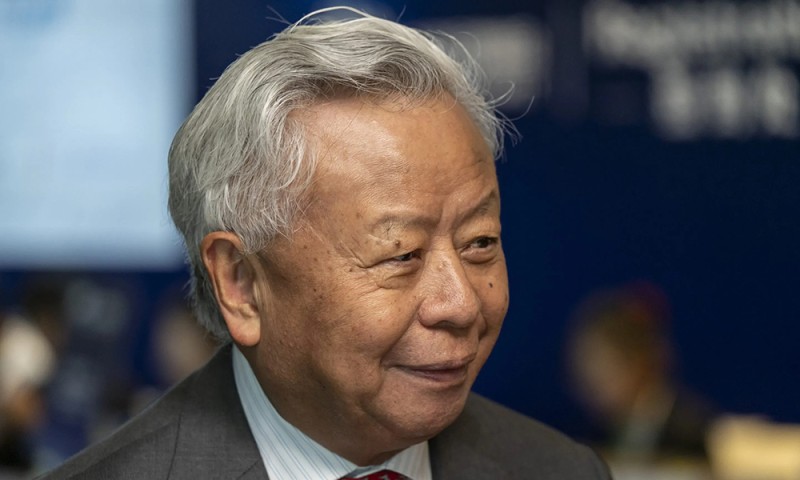
当年中国决定创立对标世界银行的机构时,选择了金立群担纲设计。他是资深金融家,曾任职于世界银行、亚洲开发银行、中国财政部以及中国主权财富基金中投公司。2014年起,金立群便成为亚洲基础设施投资银行(简称亚投行)的核心推动力量,并从2016年开始担任首任行长,任期长达十年。
金立群的十年任期将于2026年1月16日结束,届时将把行长之位交给财政部前副部长邹加怡。十年前金立群上任时,世界大体上仍朝着全球化和经济一体化方向发展,中美之间只是竞争而非敌对关系。如今的世界已然不同,保护主义卷土重来,多国放弃多边主义,中美关系也陷入僵局。
亚投行仍维持着100多个成员的规模,其中包括德国、法国、英国等美国铁杆盟友,也有印度、菲律宾等长期与中国存在摩擦的国家。
但在国际环境日益极化的当下,这家中国作为最大股东,被中国视为“负责任的利益攸关方”试验场的多边银行能否保持中立?而在美国奉行“美国优先”的背景下,多边主义能否存续?
金立群曾在世界银行、亚洲开发银行等多边机构任职数十年,他依然笃信多边主义,对全球治理前景保持乐观。
“我很难理解单打独斗的做法,”他接受《财富》杂志专访时说,“如果某个国家想跟中国合作,双方谈贸易谈跨境投资,不理解基本规则,不遵循普遍遵守的规则,如何能达成协议?”
“多边主义是永远无法逃避的。”
中国为何创办亚投行?
近十年前的2016年1月16日,中国正式成立了亚洲基础设施投资银行。该银行的设立源于全球金融危机之后的时代背景,当时中国官员在考虑如何更好地利用日益增长的外汇储备。与此同时,中国作为全球重要经济体,在国际货币基金组织、世界银行等主要全球经济机构中的话语权也不足。
根据亚投行最新财务报表,其资产规模为660亿美元,规模小于由美国主导世界银行(资产4110亿美元)和亚洲开发银行(资产1300亿美元)。但亚投行是中国首次自主设计全球治理机构,尝试在发展融资领域确立领导地位。
2014年,随着印度、印尼等多个亚洲经济体选择加入,亚投行的筹建谈判正式启动。2015年初,英国加入亚投行的决定震惊国际社会。之后,法国、德国、澳大利亚和加拿大等西方国家纷纷跟进。
两大主要经济体的缺席引人注目。彼时奥巴马政府执政的美国决定不加入亚投行,理由是担心该行在治理架构和环境保障方面能否达到“高标准”。美国在东亚最紧密的安全盟友日本也以人权、环保和债务问题为由拒绝加入。
“他们不加入,我们并不介意。”金立群表示,“我们仍然与美国金融机构、监管机构,以及日本企业保持着密切的合作。”在他看来,这正是亚投行秉持中立和不涉政治的证明。
不过,中国之所以设立亚投行,正是因为美国官员多年游说要成为“负责任的利益攸关方”。2005年,时任美国国务卿罗伯特·佐利克将这一概念界定为“承认国际体系维系自身和平繁荣,因而努力维系该体系”的国家。
然而20年后,美国官员将中国参与全球治理的举动视为威胁,担心中国试图扭曲国际机构以服务自身利益。
金立群对此类批评不以为然。“中国如今是联合国第二大出资国,也是世界银行和亚洲开发银行主要出资国之一,”金立群说,“但中国人均GDP仍低于不少国家。在我看来,这恰恰体现了中国主动承担国际责任。”
随着多个国家退出全球治理合作,金立群认为指责中国不负责任的国家颇为虚伪。“一个人要求别人‘做负责任的成员’时,应该先问问自己是否负责任。不能只要求别人‘必须当好人’,却不反思自己算不算好人?”他笑着说。
中国为何重视基建?
从创立之初,中国就通过聚焦基础设施,将亚投行与世界银行和亚洲开发银行区分开来。金立群认为,基础设施投资为后来中国经济腾飞奠定了重要基础。
“1980年的中国,没有高速公路,没有电气化铁路,没有现代化机场,没有任何所谓现代基础设施,”金立群说,“但到1995年,中国经济开始起飞。从1995年起,制造业、加工业等其他产业因基础设施完善实现了蓬勃发展。”
尽管如此,金立群认为亚投行与世界银行和亚洲开发银行并非竞争对手,称自己“对这两家银行有着深厚感情”,因为他曾任职于两家机构。“这两家机构对亚洲国家和世界其他地区贡献巨大。但时代在发展,我们需要新机构应对新挑战,更高效地推进项目,提升响应速度。”
金立群特别维护了一项制度安排,亚投行设立非常驻董事会,即董事并不常驻银行总部北京。(亚投行成立之初,有评论人士担心非常驻董事会将降低透明度,削弱董事获知信息的能力。)
“要确保管理层真正担责,让董事会真正拥有监督指导管理层的权力,董事会就不应干预日常事务。如果董事会既制定政策又审批具体项目,管理层就无需承担任何责任了,”他说。
金立群表示,这是从私营部门汲取的经验。“真正的所有者,董事会成员应当明白,不应干预机构日常运营。只有这样,才能让管理层切实负责。”
“首席执行官履职得力就可以留任,做得不好就撤换。”
金立群下一步有何打算?
金立群出生于1949年,距中华人民共和国成立仅几个月。文革期间,他曾下放到农村,先当了十年农民,后来当了老师。1978年,他重返校园深造,在北京外国语大学获得英语文学硕士学位。
此后,他历任多家中外金融机构,包括世界银行、亚洲开发银行、中国财政部、中国国际金融股份有限公司,后来进入中国主权财富基金中投公司。
2014年,金立群受命牵头组建亚投行,2016年当选为亚投行首任行长。
“地缘政治紧张局势就像海上的风浪,难免有些颠簸,”金立群说,“但我们必须在波涛中稳健航行,始终坚守中立和不涉政治的立场。”
他承认自己在任的十年里,“海面从未平静”。2016年特朗普当选美国总统后,中美竞争加剧,如今美国将中国参与全球治理当做对美国权力的威胁。
部分国家也重新考虑亚投行的成员身份。2023年,加拿大暂停了成员资格。中国仍是亚投行最大股东,持有约26%的投票权;相比之下,美国在世界银行的投票权约为16%。
尽管如此,印度和菲律宾等与中国关系紧张的多个国家,仍选择留在亚投行。“我们成功化解了成员国争端引发的诸多难题,也化解了世界各地冲突造成的挑战,”他说。
“不同国籍的员工并没有因为政府之间的矛盾彼此对立。这类问题在亚投行从未发生过。”(*)
译者:梁宇
审校:夏林
当年中国决定创立对标世界银行的机构时,选择了金立群担纲设计。他是资深金融家,曾任职于世界银行、亚洲开发银行、中国财政部以及中国主权财富基金中投公司。2014年起,金立群便成为亚洲基础设施投资银行(简称亚投行)的核心推动力量,并从2016年开始担任首任行长,任期长达十年。
金立群的十年任期将于2026年1月16日结束,届时将把行长之位交给财政部前副部长邹加怡。十年前金立群上任时,世界大体上仍朝着全球化和经济一体化方向发展,中美之间只是竞争而非敌对关系。如今的世界已然不同,保护主义卷土重来,多国放弃多边主义,中美关系也陷入僵局。
亚投行仍维持着100多个成员的规模,其中包括德国、法国、英国等美国铁杆盟友,也有印度、菲律宾等长期与中国存在摩擦的国家。
但在国际环境日益极化的当下,这家中国作为最大股东,被中国视为“负责任的利益攸关方”试验场的多边银行能否保持中立?而在美国奉行“美国优先”的背景下,多边主义能否存续?
金立群曾在世界银行、亚洲开发银行等多边机构任职数十年,他依然笃信多边主义,对全球治理前景保持乐观。
“我很难理解单打独斗的做法,”他接受《财富》杂志专访时说,“如果某个国家想跟中国合作,双方谈贸易谈跨境投资,不理解基本规则,不遵循普遍遵守的规则,如何能达成协议?”
“多边主义是永远无法逃避的。”
中国为何创办亚投行?
近十年前的2016年1月16日,中国正式成立了亚洲基础设施投资银行。该银行的设立源于全球金融危机之后的时代背景,当时中国官员在考虑如何更好地利用日益增长的外汇储备。与此同时,中国作为全球重要经济体,在国际货币基金组织、世界银行等主要全球经济机构中的话语权也不足。
根据亚投行最新财务报表,其资产规模为660亿美元,规模小于由美国主导世界银行(资产4110亿美元)和亚洲开发银行(资产1300亿美元)。但亚投行是中国首次自主设计全球治理机构,尝试在发展融资领域确立领导地位。
2014年,随着印度、印尼等多个亚洲经济体选择加入,亚投行的筹建谈判正式启动。2015年初,英国加入亚投行的决定震惊国际社会。之后,法国、德国、澳大利亚和加拿大等西方国家纷纷跟进。
两大主要经济体的缺席引人注目。彼时奥巴马政府执政的美国决定不加入亚投行,理由是担心该行在治理架构和环境保障方面能否达到“高标准”。美国在东亚最紧密的安全盟友日本也以人权、环保和债务问题为由拒绝加入。
“他们不加入,我们并不介意。”金立群表示,“我们仍然与美国金融机构、监管机构,以及日本企业保持着密切的合作。”在他看来,这正是亚投行秉持中立和不涉政治的证明。
不过,中国之所以设立亚投行,正是因为美国官员多年游说要成为“负责任的利益攸关方”。2005年,时任美国国务卿罗伯特·佐利克将这一概念界定为“承认国际体系维系自身和平繁荣,因而努力维系该体系”的国家。
然而20年后,美国官员将中国参与全球治理的举动视为威胁,担心中国试图扭曲国际机构以服务自身利益。
金立群对此类批评不以为然。“中国如今是联合国第二大出资国,也是世界银行和亚洲开发银行主要出资国之一,”金立群说,“但中国人均GDP仍低于不少国家。在我看来,这恰恰体现了中国主动承担国际责任。”
随着多个国家退出全球治理合作,金立群认为指责中国不负责任的国家颇为虚伪。“一个人要求别人‘做负责任的成员’时,应该先问问自己是否负责任。不能只要求别人‘必须当好人’,却不反思自己算不算好人?”他笑着说。
中国为何重视基建?
从创立之初,中国就通过聚焦基础设施,将亚投行与世界银行和亚洲开发银行区分开来。金立群认为,基础设施投资为后来中国经济腾飞奠定了重要基础。
“1980年的中国,没有高速公路,没有电气化铁路,没有现代化机场,没有任何所谓现代基础设施,”金立群说,“但到1995年,中国经济开始起飞。从1995年起,制造业、加工业等其他产业因基础设施完善实现了蓬勃发展。”
尽管如此,金立群认为亚投行与世界银行和亚洲开发银行并非竞争对手,称自己“对这两家银行有着深厚感情”,因为他曾任职于两家机构。“这两家机构对亚洲国家和世界其他地区贡献巨大。但时代在发展,我们需要新机构应对新挑战,更高效地推进项目,提升响应速度。”
金立群特别维护了一项制度安排,亚投行设立非常驻董事会,即董事并不常驻银行总部北京。(亚投行成立之初,有评论人士担心非常驻董事会将降低透明度,削弱董事获知信息的能力。)
“要确保管理层真正担责,让董事会真正拥有监督指导管理层的权力,董事会就不应干预日常事务。如果董事会既制定政策又审批具体项目,管理层就无需承担任何责任了,”他说。
金立群表示,这是从私营部门汲取的经验。“真正的所有者,董事会成员应当明白,不应干预机构日常运营。只有这样,才能让管理层切实负责。”
“首席执行官履职得力就可以留任,做得不好就撤换。”
金立群下一步有何打算?
金立群出生于1949年,距中华人民共和国成立仅几个月。文革期间,他曾下放到农村,先当了十年农民,后来当了老师。1978年,他重返校园深造,在北京外国语大学获得英语文学硕士学位。
此后,他历任多家中外金融机构,包括世界银行、亚洲开发银行、中国财政部、中国国际金融股份有限公司,后来进入中国主权财富基金中投公司。
2014年,金立群受命牵头组建亚投行,2016年当选为亚投行首任行长。
“地缘政治紧张局势就像海上的风浪,难免有些颠簸,”金立群说,“但我们必须在波涛中稳健航行,始终坚守中立和不涉政治的立场。”
他承认自己在任的十年里,“海面从未平静”。2016年特朗普当选美国总统后,中美竞争加剧,如今美国将中国参与全球治理当做对美国权力的威胁。
部分国家也重新考虑亚投行的成员身份。2023年,加拿大暂停了成员资格。中国仍是亚投行最大股东,持有约26%的投票权;相比之下,美国在世界银行的投票权约为16%。
尽管如此,印度和菲律宾等与中国关系紧张的多个国家,仍选择留在亚投行。“我们成功化解了成员国争端引发的诸多难题,也化解了世界各地冲突造成的挑战,”他说。
“不同国籍的员工并没有因为政府之间的矛盾彼此对立。这类问题在亚投行从未发生过。”(*)
译者:梁宇
审校:夏林
Jin Liqun will hand over his position as president of the AIIB, China's answer to the World Bank, on Jan. 16, 2026.Qilai Shen—Bloomberg via Getty Images
When China wanted to set up its answer to the World Bank, it picked Jin Liqun—a veteran financier with experience at the World Bank, the Asian Development Bank, China’s ministry of finance and the China Investment Corporation, the country’s sovereign wealth fund—to design it. Since 2014, Jin has been the force behind the Asian Infrastructure Investment Bank, including a decade as its first president, starting in 2016.
Jin’s decade-long tenure comes to an end on January 16, when he will hand over the president’s chair to Zou Jiayi, a former vice minister of finance. When Jin took over the AIIB ten years ago, the world was still mostly on a path to further globalization and economic integration, and the U.S. and China were competitors, not rivals. The world is different now: Protectionism is back, countries are ditching multilateralism, and the U.S. and China are at loggerheads.
The AIIB has largely managed to keep its over-100 members, which includes many countries that are either close allies to the U.S.—like Germany, France and the U.K.—or have longstanding tensions with Beijing, like India and the Philippines.
But can the AIIB—which boasts China as its largest shareholder, and is closely tied to Beijing’s drive to be seen as a “responsible stakeholder”—remain neutral in a more polarized international environment? And can multilateralism survive with an “America First” administration in Washington?
After his decades working for multilateral organizations—the World Bank, the ADB, and now the AIIB—Jin remains a fan of multilateralism and is bullish on the prospects for global governance.
“I find it very hard to understand that you can go alone,” Jin tells Fortune in an interview. “If one of those countries is going to work with China, and then China would have negotiations with this country on trade, cross-border investment, and so on—how can they negotiate something without understanding the basics, without following the generally accepted rules?”
“Multilateralism is something you could never escape.”
Why did China set up the AIIB?
Beijing set up the Asian Infrastructure Investment Bank almost a decade ago, on Jan. 16, 2016. The bank grew from the aftermath of the Global Financial Crisis, when Chinese officials considered how best to use the country’s growing foreign exchange reserves. Beijing was also grumbling about its perceived lack of influence in major global economic institutions, like the International Monetary Fund and the World Bank, despite becoming one of the world’s most important economies.
With $66 billion in assets (according to its most recent financial statements), the Asian Infrastructure Investment Bank is smaller than its U.S.-led peers, the World Bank (with $411 billion in assets) and the Asian Development Bank (with $130 billion). But the AIIB was designed to be China’s first to design its own institutions for global governance and mark its name as a leader in development finance.
Negotiations to establish the bank started in earnest in 2014, as several Asian economies like India and Indonesia chose to join the new institution as members. Then, in early 2015, the U.K. made the shocking decision to join the AIIB as well; several other Western countries, like France, Germany, Australia, and Canada, followed suit.
Two major economies stood out in abstaining. The U.S., then under the Obama administration, chose not to join the AIIB, citing concerns about its ability to meet “high standards” around governance and environmental safeguards. Japan, the U.S.’s closest security ally in East Asia, also declined, ostensibly due to concerns about human rights, environmental protection, and debt.
“They chose not to join, but we don’t mind.” Jin says. “We still keep a very close working relationship with U.S. financial institutions and regulatory bodies, as well as Japanese companies.” He sees this relationship as proof of the AIIB’s neutral and apolitical nature.
Still, Beijing set up the AIIB after years of being lobbied by U.S. officials to become a “responsible stakeholder,” when then-U.S. Secretary of State Robert Zoellick defined in 2005 as countries that “recognize that the international system sustains their peaceful prosperity, so they work to sustain that system.”
Two decades later, U.S. officials see China’s presence in global governance as a threat, fearing that Beijing is now trying to twist international institutions to suit its own interests.
Jin shrugs off these criticisms. “China is now, I think, the No. 2 contributor to the United Nations, and one of the biggest contributors to the World Bank and the Asian Development Bank” (ADB), Jin says. “Yet the per capita GDP for China is still quite lower than a number of countries. That, in my view, is an indication of its assumption of responsibility.”
And now, with several countries withdrawing from global governance, Jin thinks those lecturing China on being responsible are being hypocritical. “When anybody tells someone else ‘you should be a responsible member’, you should ask yourself whether I am, myself, a responsible man. You can’t say, ‘you’ve got to be a good guy.’ Do you think you are a good guy yourself?” he says, chuckling.
Why does China care about infrastructure?
From its inception, Beijing tried to differentiate the AIIB from the World Bank and the ADB through its focus on infrastructure. Jin credits infrastructure investment for laying part of the groundwork for China’s later economic boom.
“In 1980, China didn’t have any expressways, no electrified railways, no modern airports, nothing in terms of so-called modern infrastructure,” Jin says. “Yet by 1995, China’s economy started to take off. From 1995, other sectors—manufacturing, processing—mushroomed because of basic infrastructure.”
Still, Jin doesn’t see the AIIB as a competitor to the World Bank and the ADB, saying he’s “deeply attached” to both banks due to his time serving in both. “Those two institutions have been tremendous for Asian countries and many others around the world. But time moves forward, and we need something new to deal with new challenges, do projects more cost-effectively, and be more responsive.”
Jin is particularly eager to defend one particular institutional choice: the AIIB’s decision to have a non-resident board, with directors who don’t reside in the bank’s headquarters of Beijing. (Commentators, at the time of the bank’s inception, were concerned that a non-resident board would reduce transparency, and limit the ability of board directors to stay informed.)
“In order for management to be held accountable, in order for the board to have the real authoritative power to supervise and guide the management, the board should be hands-off. If the board makes decisions on policies and approves specific projects, the management will have no responsibility,” he says.
Jin says it was a lesson learned from the private sector. “The real owners, the board members, understand they should not interfere with the routine management of the institution, because only in so doing can they hold management responsible.”
“If the CEO is doing a good job, they can go on. If they are not doing a good job, kick them out.”
What does Jin Liqun plan to do next?
Jin Liqun was born in 1949, just a few months before the official establishment of the People’s Republic of China. He was sent to the countryside during the Cultural Revolution, and spent a decade first as a farmer, and eventually a teacher. He returned to higher education in 1978, getting a master’s in English Literature from Beijing Foreign Studies University.
From there, he made his way through an array of Chinese and international financial institutions: the World Bank, the Asian Development Bank, China’s Ministry of Finance, the China International Capital Corporation, and, eventually, the China Investment Corporation, the country’s sovereign wealth fund.
In 2014, Jin was put in charge of the body set up to create the AIIB. Then, in 2016, he was elected the AIIB’s first-ever president.
“Geopolitical tensions are just like the wind or the waves on the ocean. They’ll push you a little bit here and there,” Jin says. “But we have to navigate this rough and tumble in a way where we wouldn’t deviate from our neutrality and apolitical nature.”
He admits “the sea was never calm” in his decade in office. U.S. President Donald Trump’s election in 2016 intensified U.S.-China competition, with Washington now seeing China’s involvement in global governance as a threat to U.S. power.
Other countries have also rethought their membership in the AIIB: Canada suspended its membership in 2023 after a former Canadian AIIB director raised allegations of Chinese Communist Party influence among leadership. (The AIIB called the accusations “baseless and disappointing”). China is also the AIIB’s largest shareholder, holding around 26% of voting shares; by comparison, the U.S. holds about 16% of the World Bank’s voting shares.
Still, several countries that have tense relations with China, like India and the Philippines, have maintained their ties with the AIIB. “We managed to overcome a lot of difficulty which arose from disputes between some of our members, and we managed to overcome some difficulty arising from conflicts around the world,” he said.
“Staff of different nationalities did not become enemies because their governments were having problems with each other. We never had this kind of problem.”